How Much Does an Epoxy Garage Floor Cost in Massachusetts?
Two garages with similar footprints can require very different work beneath the finish. A useful estimate explains what will be removed, repaired, installed, and protected during curing.
An epoxy garage floor quote depends on the measured area, concrete condition, preparation, repairs, and the complete coating system. We quote after measuring on site rather than assigning a price from a garage size label.
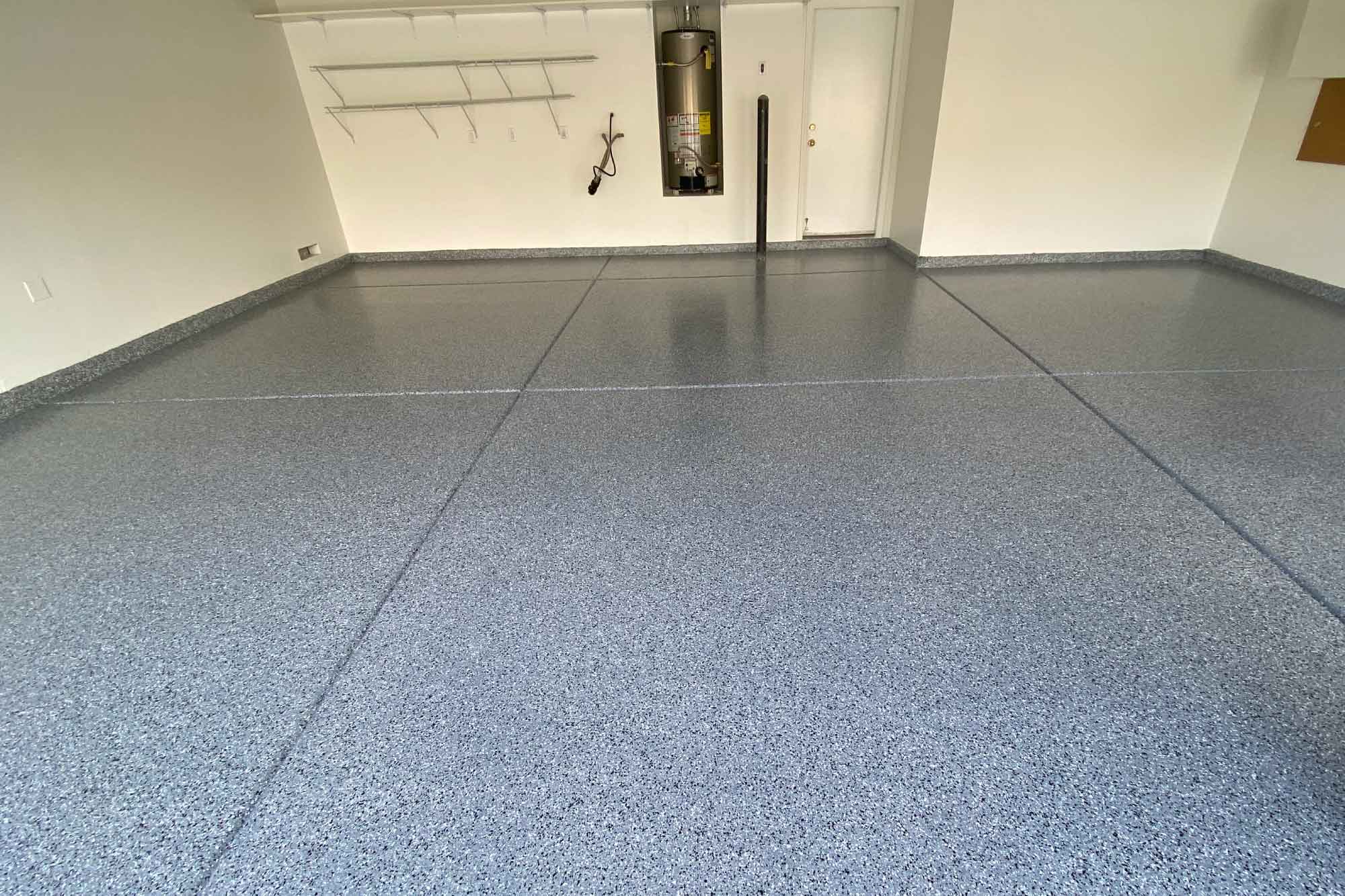
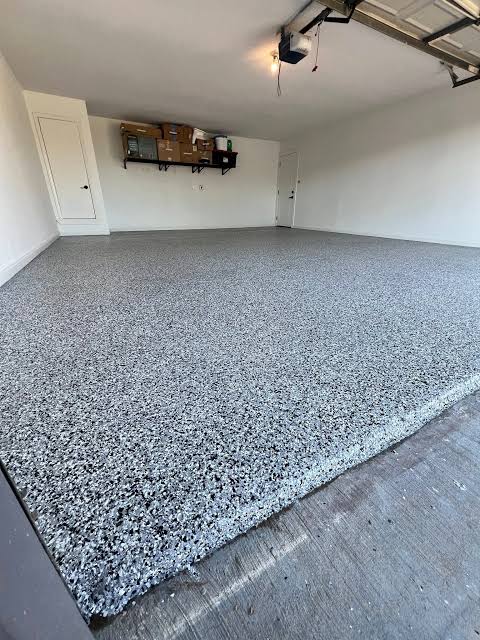
What affects epoxy garage floor cost in Massachusetts?
Square footage establishes how much concrete needs preparation and how much coating material the specified system requires. It does not describe the whole job. A garage with wide, open access is different from one with narrow doorways, fixed equipment, multiple small rooms, or steps that need separate detailing. Edges, stem walls, thresholds, and transitions should be identified rather than assumed to be included. The condition of the slab can matter as much as its size. Existing paint, adhesive, weak surface concrete, and oil contamination add work before a new coating can bond. Cracks and spalled areas need assessment because a coating does not rebuild damaged concrete by itself. Deep contamination may require additional removal or may limit whether the floor is suitable at all. Moisture findings also affect system selection. A slab that needs a compatible moisture-control primer is not equivalent to a dry, sound slab receiving a standard system. These differences are why a measured site visit is more useful than a generic estimate based on the number of vehicles the garage holds.
Why do preparation and repairs change the quote?
Diamond grinding creates a mechanical profile and removes material that could interfere with adhesion. The equipment, tooling, edge work, dust collection, and number of passes depend on what is actually present. Removing a thick old coating is not the same operation as profiling clean concrete. Neither operation should be replaced by simply washing the floor and applying resin over an uncertain surface. Repairs also need clear boundaries. Filling a stable crack, rebuilding a shallow spall, and addressing a moving joint are different tasks. Active movement or water entry may require work outside the coating scope. Ask whether repairs are included, how questionable areas will be evaluated, and what happens if removal exposes more damage. The estimate should explain how dust and waste are handled and where equipment can enter. Access to suitable power and a clear work area affects planning. None of these details makes a coating more decorative, but they determine whether the installation starts on a sound surface and whether the proposed schedule is realistic.
How do epoxy layers, flake, and topcoats affect cost?
An epoxy floor is a specified assembly, not just a color rolled onto concrete. Primer selection, base coat thickness, decorative broadcast, and protective finish all affect material use and labor. Compare the number and purpose of layers along with the intended coverage and cured film build. A thin coating and a fuller broadcast system should not be treated as interchangeable simply because both are called epoxy. Flake coverage can be light or more complete, and excess broadcast material must be removed before the surface is finished. Texture changes how much finishing work and topcoat material may be needed. Solid color, flake, quartz, and metallic effects also involve different application requirements. The finish should suit the garage rather than adding layers without a purpose. Ask how the selected topcoat handles sunlight, tire exposure, cleaning, and expected spills. Product limitations still apply after installation. A detailed proposal describes the actual epoxy system being offered and does not use a decorative sample as a substitute for explaining its construction.
| Quote component | What to compare |
|---|---|
| Area and access | Measured coating area, edges, steps, thresholds, equipment access, and any surfaces excluded from the scope. |
| Preparation and repairs | Removal of previous finishes, diamond grinding, crack and spall repairs, and treatment of uncertain areas. |
| System and finish | Specified layers, intended film build, flake coverage, texture, and a compatible protective finish. |
| Schedule | Work days, cure conditions, owner responsibilities, and separate permissions for foot traffic and vehicles. |
- Clear enough space for the site assessment to include corners, doorways, and places normally covered by storage. Point out damp areas and known spills rather than covering them up.
- Tell the estimator how the garage is used, including vehicle parking, workshop activities, chemical storage, and any need for a particular cleaning routine or texture.
- Compare proposals using the same measured area and finish requirements. Confirm that preparation, repairs, coating layers, and the intended return-to-service conditions are described.
- Arrange temporary storage and parking around the written cure instructions. Do not assume that a surface that feels dry is ready for loaded shelving or warm vehicle tires.
What should a written garage floor estimate include?
A useful proposal lets you compare scope rather than guessing from the final figure. It should identify the measured floor area, preparation method, repair allowances, moisture evaluation, coating layers, finish, and access assumptions. It should also distinguish the installation period from the cure period before storage or vehicles return. Moving cabinets, finding temporary parking, and protecting belongings may be owner responsibilities. Ask what happens if hidden contamination or unexpected slab damage is discovered during preparation. Written exclusions are more useful than a vague promise that everything is included. The goal is a defined epoxy installation suited to the actual concrete, with a return-to-use plan that the household can follow. We measure and assess the floor on site before quoting so those decisions are based on the garage rather than an assumed standard condition.
More questions
Can you quote from a photo?
Photos can help identify questions and plan a visit, but they cannot establish slab soundness or moisture conditions. We quote after measuring and evaluating the garage on site.
Does a larger garage always cost more per unit of area?
Not necessarily; layout, access, and preparation affect the work as well as size. Compare the full scope rather than assuming the same rate applies to every floor.
Are crack repairs part of the coating?
They should be described explicitly in the proposal. Moving cracks, structural concerns, and water entry may need separate evaluation rather than ordinary filling.
Is the lowest quote the same system?
Not always, because preparation, layer thickness, repairs, and finishing details can differ. Ask for those details before treating proposals as equivalent.
Still not sure what your floor needs?
Send us a few details or a photo of the slab. We will tell you honestly whether coating it is the right move.
Serving Central Massachusetts homeowners and businesses