How Long Does an Epoxy Garage Floor Last?
Wear usually develops unevenly, with tire paths and the garage entrance seeing more stress than protected corners. Distinguishing surface wear from loss of adhesion helps determine whether cleaning, recoating, or removal is appropriate.
Roughly 5 to 15 years is a general industry expectation for an epoxy garage floor, not a guaranteed service life. Preparation, film build, moisture, sunlight, vehicle use, and maintenance can move an individual floor outside that range.
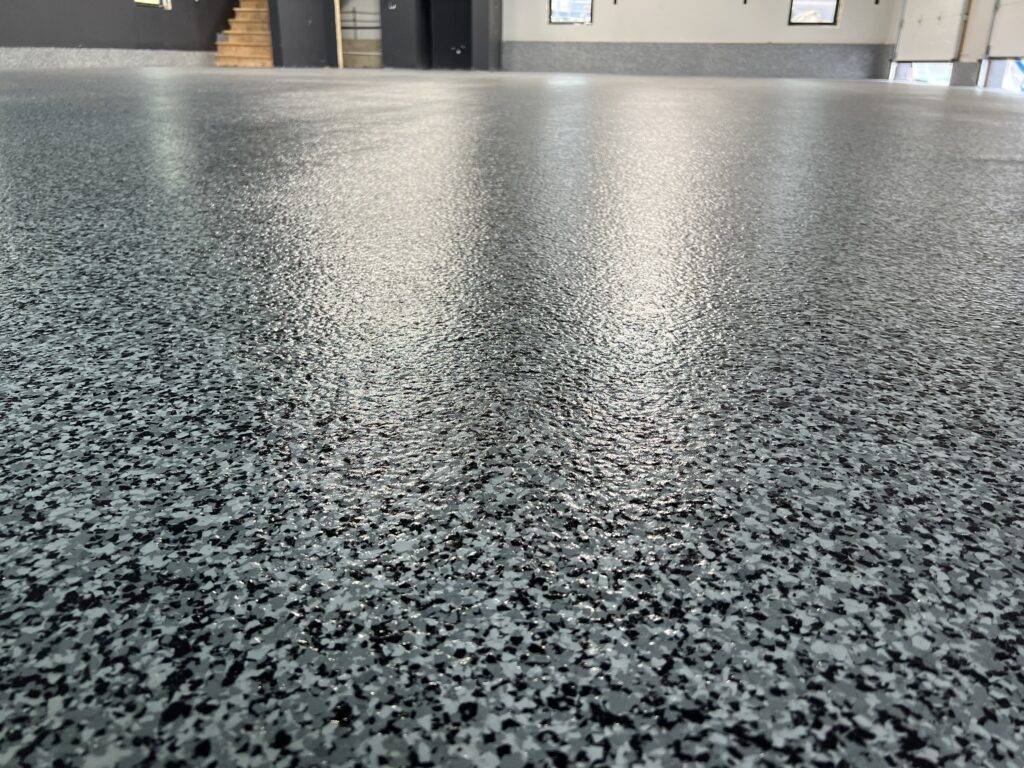

What determines how long an epoxy garage floor lasts?
The foundation of service life is a sound bond to concrete that can support the coating. Weak surface paste, dust, oil, old sealer, or excessive moisture can undermine that bond even when the visible finish looks good at first. Mechanical preparation and a compatible primer help establish suitable conditions, but they cannot make unsound concrete or active water problems disappear. Film build is another major factor. A system needs the specified coverage and cured thickness to provide its intended wear allowance. A thin decorative application should not be expected to perform like a more substantial assembly simply because both contain epoxy. The general expectation of roughly 5 to 15 years describes a broad range of ordinary outcomes, not a timer that starts at installation. Exposure and use vary too much for a precise prediction. A lightly used residential garage, an active repair workshop, and a commercial vehicle bay put very different demands on their floors. Any warranty should be read separately from a general lifespan discussion.
What makes epoxy peel, scratch, or wear out early?
Peeling is a loss of adhesion, whereas scratching and gradual dulling are changes at the exposed surface. They can occur together, but their causes and repairs differ. Moisture moving through a slab, contamination beneath the coating, or application outside product limits can lead to blistering and disbondment. Recoating without finding the cause can repeat the problem. Abrasive grit carried in by tires and footwear gradually wears the finish, especially where vehicles turn or people repeatedly walk. Salt residue adds cleaning demands and is commonly mixed with sand that scratches under traffic. Dragging cabinets, metal stands, or appliances can cut through a finish regardless of its age. Exposure to unsuitable chemicals can soften, stain, or dull some coatings, particularly when spills remain in place. Premature parking may also damage a system that has not reached its required service cure. None of these conditions can be assessed reliably from the word epoxy alone; the actual product, installation, and use history matter.
Does sunlight shorten epoxy floor life?
Ultraviolet exposure can change the appearance of conventional epoxy, often showing most clearly near a garage door or a sunny window. Yellowing or color shift is not automatically evidence that the coating has lost its bond. Appearance and structural performance should be evaluated separately, although prolonged exposure can affect surface condition depending on the product. Ask how the selected epoxy system is expected to look in the sunlight the garage receives. Shade does not remove the need for cleaning or prevent damage from vehicles, but it can reduce one source of appearance change. Film thickness also does not make a conventional epoxy immune to UV effects. A maintenance decision should consider whether a floor is merely discolored, locally scratched, or actually detached from the slab. Grinding away an otherwise bonded floor simply because of a color change may be unnecessary, while covering a peeling surface with more resin leaves the underlying problem unresolved. A condition assessment is more useful than using age as the only replacement rule.
| Visible condition | What it may mean | Reasonable next step |
|---|---|---|
| Fine scratches or dull traffic lanes | Wear at the exposed finish, sometimes made worse by grit. | Clean first, then assess whether a compatible maintenance recoat is suitable. |
| Yellowing near sunlight | Appearance change that does not by itself establish bond failure. | Review exposure and product expectations before choosing a repair. |
| Blisters or loose sheets | Possible moisture, contamination, weak concrete, or application problems. | Investigate the cause before applying additional material. |
| Chips around a crack or joint | Impact or ongoing slab movement may be involved. | Evaluate the concrete and preserve necessary movement details. |
- Remove loose grit regularly using a soft broom or suitable vacuum. Concentrate on tire paths, entrances, and workbench areas where abrasive particles repeatedly pass under loads.
- Wash with a manufacturer-approved mild cleaner and remove dirty rinse water. Avoid leaving concentrated cleaner, road salt, or automotive liquids on the surface between cleaning sessions.
- Lift or move heavy items on suitable equipment rather than dragging them. Use clean, compatible protective pads where concentrated loads or repeated movement could mark the finish.
- Inspect the floor periodically after cleaning, when changes are easier to see. Record peeling, dampness, crack movement, and unusual softening so the cause can be assessed early.
When can an epoxy garage floor be recoated?
A maintenance recoat can be appropriate when the existing system is firmly bonded, compatible with the new materials, and worn mainly at the surface. It still requires cleaning, preparation, and attention to the manufacturer’s recoat requirements. Fresh resin should not be rolled onto a dirty or glossy old floor without establishing a suitable bond. If there is widespread peeling, moisture-related damage, or weak concrete beneath the finish, removal and corrective preparation may be needed instead. Local damage can sometimes be repaired, but repaired areas may remain visible because the surrounding coating has aged. Inspecting wear before it exposes the base system can preserve more options. Keep the original product information and installation instructions if available, and note changes such as damp patches, blistering, or expanding cracks rather than treating them as routine cosmetic wear.
More questions
Is 15 years guaranteed?
No; roughly 5 to 15 years is a general industry expectation, not a promise. Actual life depends on the floor, the specified system, exposure, and care.
Does yellowing mean the floor has failed?
Not necessarily, because UV-related color change can occur while adhesion remains sound. Loose areas, blisters, and exposed concrete require a separate condition assessment.
Can I coat over peeling epoxy?
Loose coating is not a sound foundation for another layer. The failed material and its cause need to be addressed before a repair system is selected.
Will cleaning make the coating last forever?
No; cleaning reduces avoidable abrasive wear and residue buildup but cannot stop all aging. It also cannot correct a poor bond or moisture coming through the slab.
Still not sure what your floor needs?
Send us a few details or a photo of the slab. We will tell you honestly whether coating it is the right move.
Serving Central Massachusetts homeowners and businesses