Commercial Epoxy Flooring
Commercial epoxy flooring provides a coated concrete surface for business and industrial spaces. We assess traffic, equipment, spills, cleaning, and access before recommending an epoxy system for a Central Massachusetts facility.
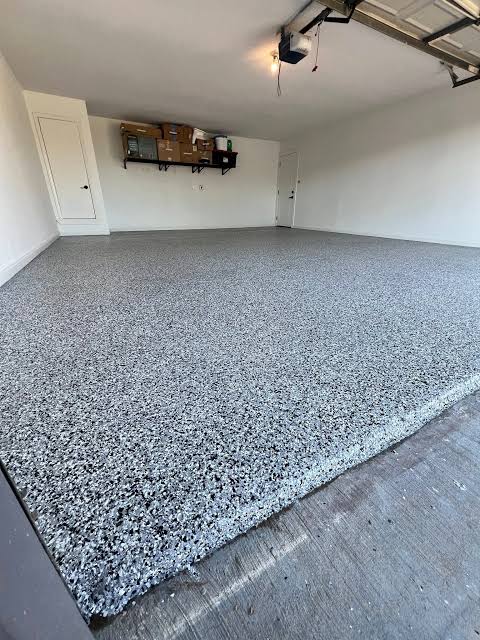

Use Comes First
We ask what happens on the floor before discussing its finish.
Concrete Assessment
Existing coatings, damage, contamination, and moisture influence the preparation scope.
Access Planning
Installation and curing need to fit an agreed plan for keeping people and equipment out.
Practical Finishes
Epoxy finish selection considers appearance alongside cleaning and working conditions.
Where commercial epoxy may be a good fit
- Workshops and service areas where concrete sees regular foot traffic, rolling equipment, and routine cleanup. We need to understand the actual equipment and substances involved before recommending a coating.
- Storage and warehouse areas where the floor's condition, loading, and traffic routes can be assessed. Forklifts and other heavy equipment require a specific discussion rather than a general claim that every epoxy finish is suitable.
- Small business interiors where a consistent appearance and maintainable surface matter. Customer access, wet entrances, and the existing cleaning routine should be included in the scope discussion.
- Mixed-use commercial spaces where different activities share one slab. A loading area, work zone, and customer route may place different demands on the floor, even when they are close together.
A commercial flooring conversation starts with operations. Tell us which vehicles or machines cross the slab, what gets spilled, how often cleaning takes place, and whether equipment can be moved. We also ask about areas that stay damp, coatings that are peeling, and repairs that have already been attempted. Those details help distinguish a cosmetic concern from a condition that could affect bonding or service. Our family-owned business installs epoxy systems, but we do not assume that one finish suits every business. The recommendation needs to reflect the concrete and the actual work taking place above it.
| Operating condition | What to discuss | Planning consequence |
|---|---|---|
| Wheeled traffic | Describe equipment, wheel types, turning areas, and repeated routes rather than simply calling the floor heavy duty. | Those details help assess suitability and identify wear areas. A floor coating does not correct a slab that cannot support the loads placed on it. |
| Spills and washing | Identify the substances involved, their exposure time, and the products and equipment used for cleaning. | Chemical resistance must be considered for the selected system. A general epoxy label is not a promise of resistance to every cleaner or spill. |
| Public access | Explain entrance conditions, wet walking routes, and how customers or staff will move around the work. | Texture, transitions, installation boundaries, and closure planning need attention. No floor finish removes the need for good housekeeping and safe access arrangements. |
Our commercial installation sequence
- 1
Agree on access
We identify the work area and discuss how it will be cleared and kept out of service. Machinery, stock, and fixed obstructions affect access, so these details belong in the plan before preparation begins.
- 2
Assess and prepare
We inspect existing coatings, check moisture concerns, sweep, and address contamination. Diamond grinding prepares the concrete surface for the proposed epoxy system; acid etching is not our substitute for mechanical preparation.
- 3
Repair and detail
Suitable cracks and spalling are prepared and patched. We review joints, drains, doorway edges, and transitions, including any conditions that need separate correction or cannot reasonably be solved with a coating.
- 4
Install the epoxy
Primer and coating layers follow the selected system's requirements. Decorative flake and texture options are considered according to the intended use rather than assumed to have identical performance.
- 5
Control return to service
The floor remains protected while it cures. We discuss separate requirements for foot traffic, moving equipment, and normal operations so an apparently dry surface is not put under demanding service too early.
- A coated surface can reduce exposed concrete dust and make routine cleanup more manageable. Maintenance still needs to match the coating and the material being removed.
- Finish choices allow appearance to be considered alongside operational needs. Pattern, color, and texture should support the room's use rather than substitute for a suitability assessment.
- Preparation and repairs can be addressed within a coordinated floor scope. This helps clarify what is included, what remains visible, and which underlying conditions need another solution.
- An agreed installation sequence gives the business a basis for planning closures and moving stock. We discuss constraints without promising uninterrupted operations or identical cure times at every site.
The free on-site estimate considers area, coating removal, contamination, repair scope, access, finish selection, and scheduling constraints. Bring information about cleaning chemicals and equipment use if it is available. After installation, a practical maintenance routine matters: remove abrasive debris, deal with spills promptly, and use cleaners compatible with the coating. Report damage before it becomes an obstacle to cleaning or safe movement. A business floor should be selected with a clear understanding of its job, its limits, and the time needed to put it into service properly.
Frequently asked questions
Can you epoxy a warehouse floor?
We assess warehouse floors for epoxy installation based on concrete condition and actual use. Equipment loads, wheel traffic, moisture, and cleaning requirements all need review before recommending a system.
Can my business stay open during epoxy installation?
That depends on the layout, access, preparation work, and curing requirements. We discuss closure or separation needs before scheduling rather than promising uninterrupted operation.
Is commercial epoxy resistant to chemicals?
Resistance depends on the selected system and the substance, concentration, and exposure involved. Tell us what is used or spilled so compatibility can be considered rather than assumed.
Can epoxy go around floor drains?
Drain edges and coating boundaries need assessment and detailing. A coating does not correct poor drainage or damaged drain components, so those issues may require separate work.
What affects the cost of a commercial epoxy floor?
Area, existing coatings, contamination, repairs, access, system choice, and scheduling all affect the scope. We provide a free on-site estimate after reviewing the facility.
Want Commercial Epoxy Flooring in your space?
Send us the details and we will walk you through the system options, the prep your slab needs, and what the job involves.
Serving Central Massachusetts homeowners and businesses