Epoxy Garage Floor Coatings
An epoxy garage floor is a layered resin coating bonded to mechanically prepared concrete. It suits homeowners who want a finished wearing surface and understand that concrete condition, system selection, and curing all matter.
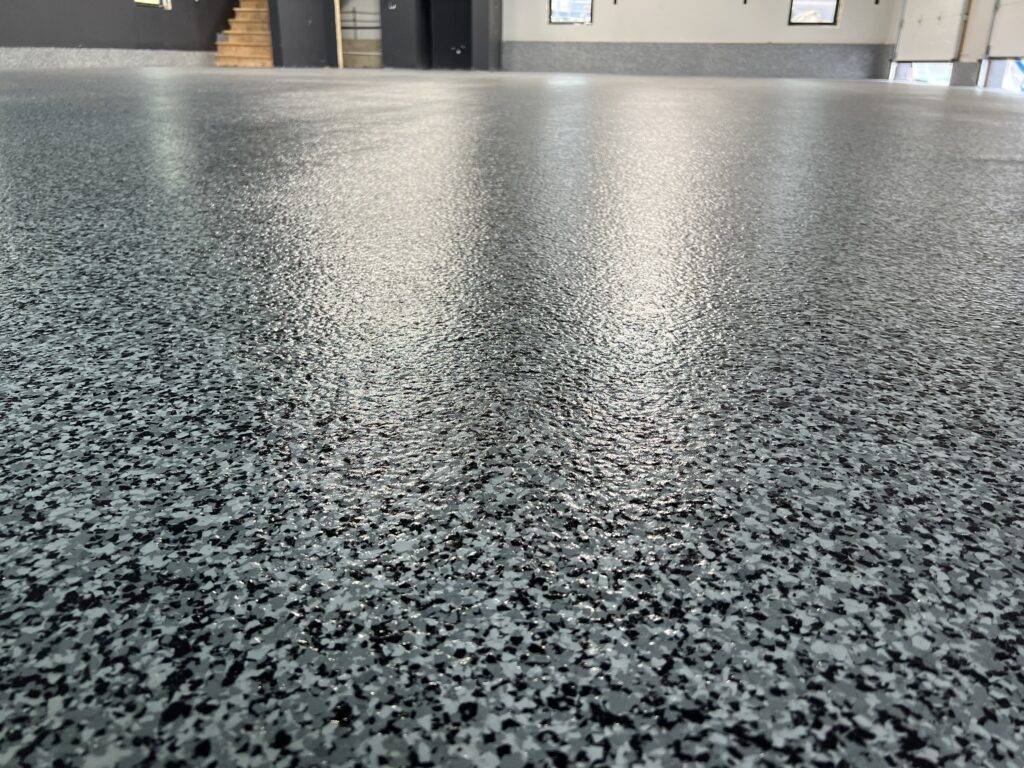

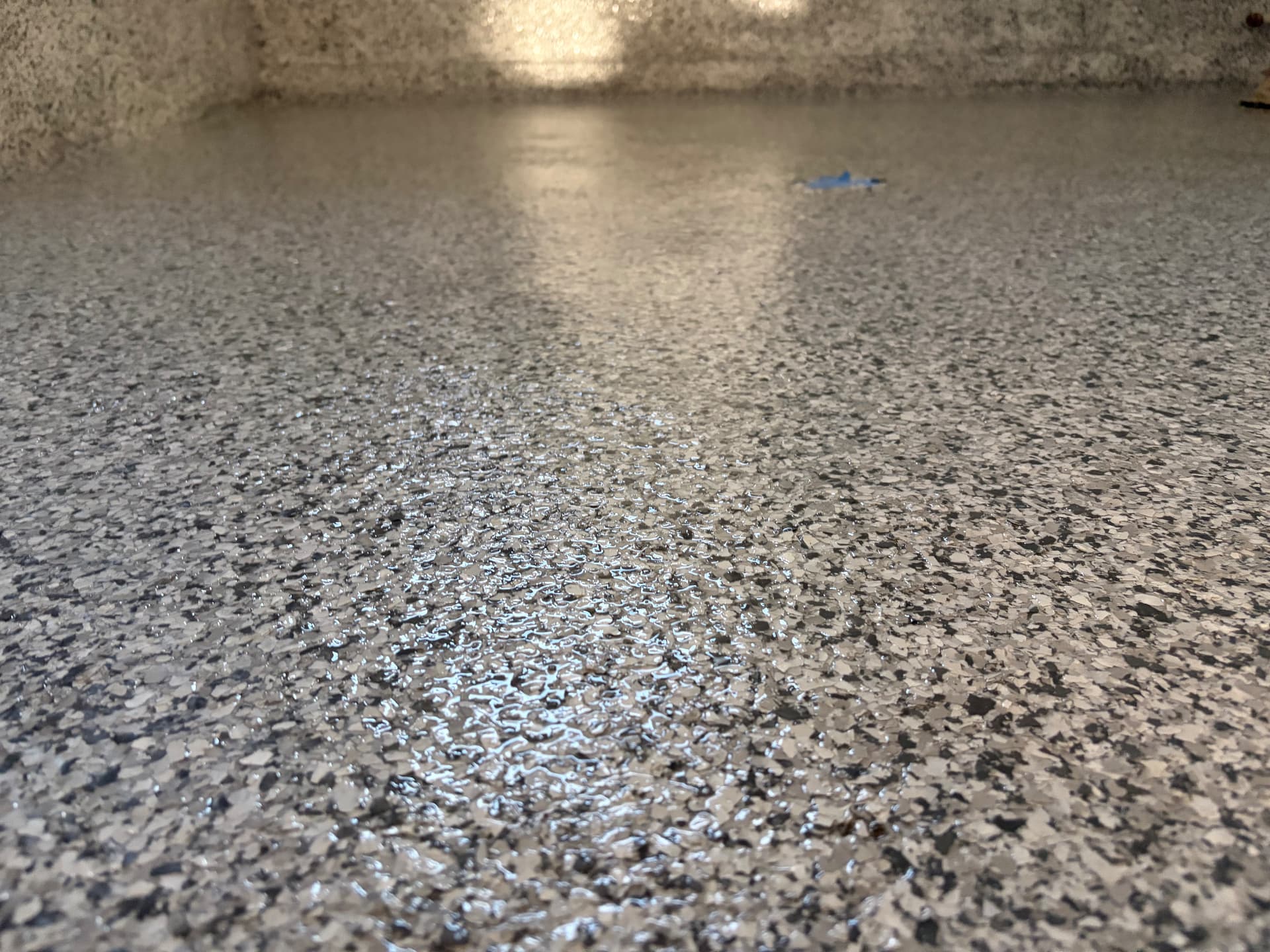
Mechanical Preparation
Diamond grinding prepares the concrete for bonding without relying on acid etching.
System Selection
We match the epoxy finish to the garage's use and the condition of its slab.
Moisture Review
Moisture concerns are checked before coating recommendations are finalized.
Clear Expectations
We explain preparation, coating layers, and the wait before returning vehicles.
What makes epoxy a flooring system
Epoxy flooring is more than a colored surface brushed onto a garage slab. Resin and hardener react to form a cured coating, and that coating needs suitable concrete underneath it. The selected system may include a primer, an epoxy coat, decorative material, and a protective finish. Each layer has a purpose and an application window. We consider those requirements alongside the slab's condition and the way you use the garage. A good-looking sample helps with finish selection, but it cannot tell you whether existing paint, moisture, or weak concrete needs attention first.
| System detail | What we consider | Why it matters |
|---|---|---|
| Concrete surface | Existing paint, dense concrete, loose material, and contamination need inspection before the preparation method and scope are settled. | The coating needs a sound surface to bond to. Applying more material does not make weak concrete or poorly bonded paint a dependable base. |
| Finish selection | Flake blends and clear topcoats offer different appearances and textures. Intended use and cleaning needs belong in that discussion. | A decorative preference should work alongside practical requirements. Color or pattern alone does not establish traction, chemical resistance, or suitability for every activity. |
| Return to use | The system's curing requirements and actual site conditions determine when the floor can accept different kinds of traffic. | Walking, replacing stored belongings, and parking vehicles can require different waiting periods. Planning for them avoids putting the new coating into service too soon. |
- A bonded wearing surface over properly prepared concrete can make routine sweeping and cleaning easier. It does not eliminate the need to remove grit or deal with spills before they spread.
- A choice of epoxy finishes lets you balance a plain appearance with decorative texture. We discuss the whole system instead of treating every clear coat, broadcast, and base layer as interchangeable.
- Repair work can be coordinated with coating preparation so damaged areas are considered before the finish goes down. Some repairs may remain visible, and moving cracks can return through a coating.
- A planned installation gives you a clear sequence for clearing the garage, preparing the slab, applying coatings, and waiting for cure. That sequence matters as much as the final color choice.
Our epoxy garage floor installation process
- Review the slab and intended use. We ask about existing coatings, recurring dampness, oil exposure, and vehicle use, then check moisture conditions and identify issues that could change the proposed work.
- Clear, sweep, and degrease. Dirt and contamination need attention before the coating is applied. Oil that has penetrated concrete can require more assessment than a quick surface cleaning.
- Diamond grind the concrete. Mechanical preparation opens the surface and removes material as needed for the proposed system. We do not substitute acid etching for this grinding step.
- Address repairs and boundaries. Suitable cracks and spalled areas are prepared and patched, while edges, drains, and transitions are reviewed. Joints that accommodate movement should not simply be hidden without considering their function.
- Apply the specified epoxy layers. Primer, body coat, decorative broadcast when selected, and the appropriate finish are installed in sequence. Application conditions and recoat requirements guide the work rather than a fixed schedule alone.
- Protect the floor during cure. We explain when the garage can accept foot traffic, stored items, and vehicles. Keep the surface free of water, debris, and premature use during the required curing period.
- Home garages used for regular parking, where the owner can allow time for proper preparation and curing rather than needing immediate vehicle access.
- Garages used for storage and light workshop activities, with finish selection based on likely spills, rolling equipment, and routine cleaning.
- Existing garage floors needing a coordinated repair and coating plan, provided the slab assessment supports installation and identifies any limits first.
Cost depends on the work below the visible finish as well as the finish itself. Floor area, old coating removal, contamination, patching, moisture findings, and access all affect the estimate. Our free on-site estimate gives those factors context for your garage. It also gives you a chance to ask about cleaning products, texture, and what normal use should look like after curing. We would rather explain a limitation before work begins than leave you assuming that every epoxy system performs identically. The right recommendation starts with the concrete and the job you need the floor to do.
Frequently asked questions
Is epoxy the same as garage floor paint?
The name on a container is not enough to identify a complete flooring system. We install epoxy systems with preparation and coating layers selected for the slab and intended use.
Can epoxy go over my existing garage coating?
That depends on the existing coating's condition, bond, and compatibility. We inspect it first and determine what removal or preparation is needed rather than assuming it can stay.
Why do you grind concrete before epoxy?
Diamond grinding prepares the concrete surface for the coating to bond. It also helps address surface material that should not remain beneath the new system.
Will epoxy cover cracks in my garage floor?
Suitable cracks can be repaired as part of preparation. A crack that continues to move may become visible again, so coating is not a promise of permanent crack concealment.
How do I get an epoxy garage floor estimate?
Request a free on-site estimate so we can examine the slab and discuss the finish. Area, repairs, existing coatings, and moisture conditions help determine the proposed scope.
Want Epoxy Garage Floor Coatings in your space?
Send us the details and we will walk you through the system options, the prep your slab needs, and what the job involves.
Serving Central Massachusetts homeowners and businesses