Residential Garage Floor Coatings
Residential garage floor coatings cover prepared concrete with an epoxy system selected for parking, storage, and everyday household use. We help Central Massachusetts homeowners choose a finish that suits the garage and understand what the slab needs before installation.

Prepared Concrete
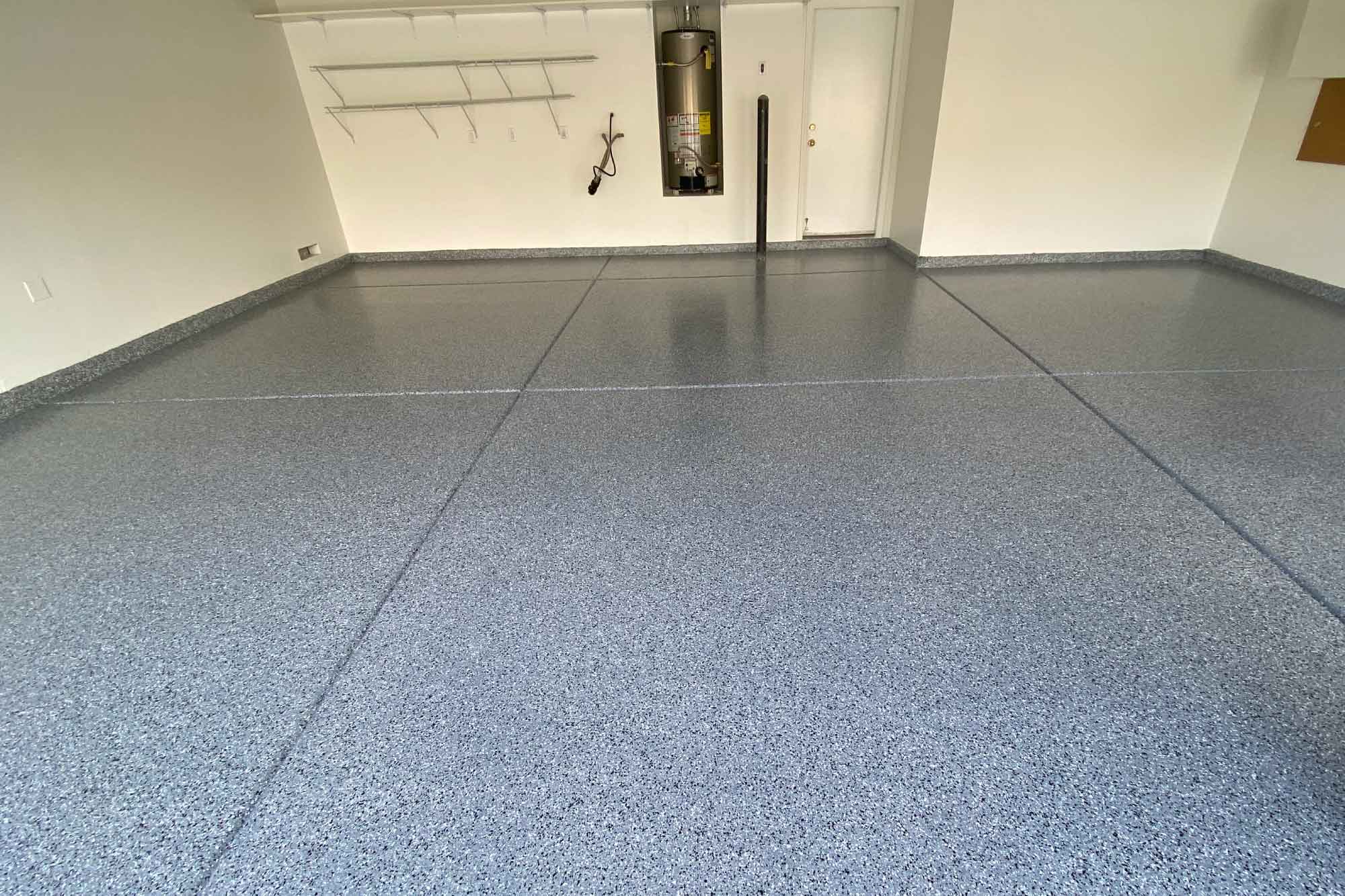
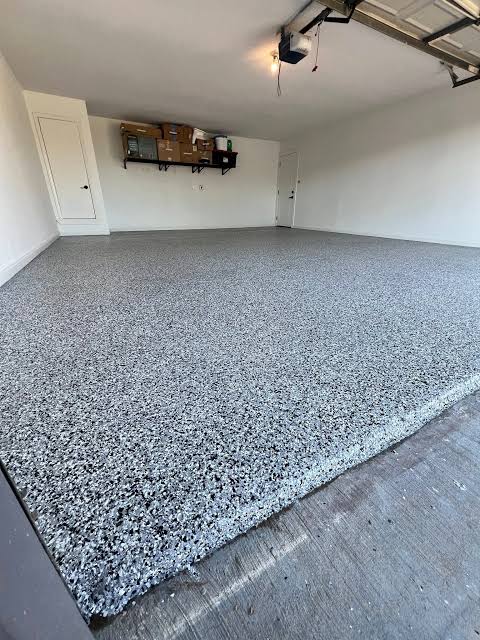
We diamond grind the slab and address repair needs before applying epoxy.
Finish Choices
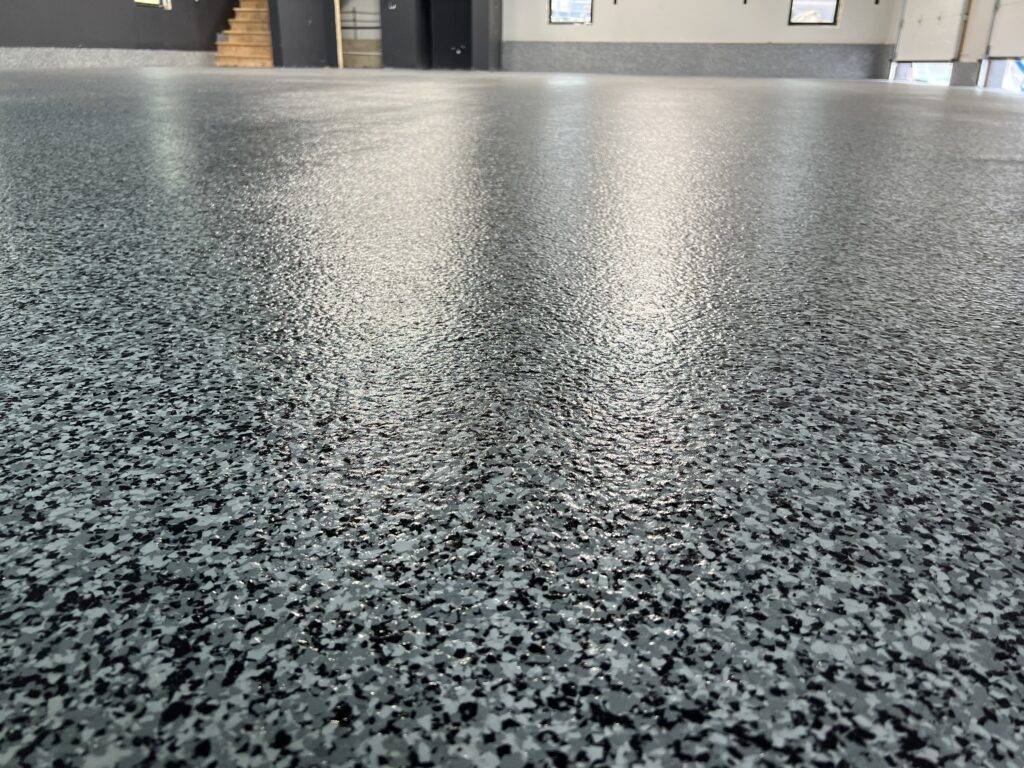
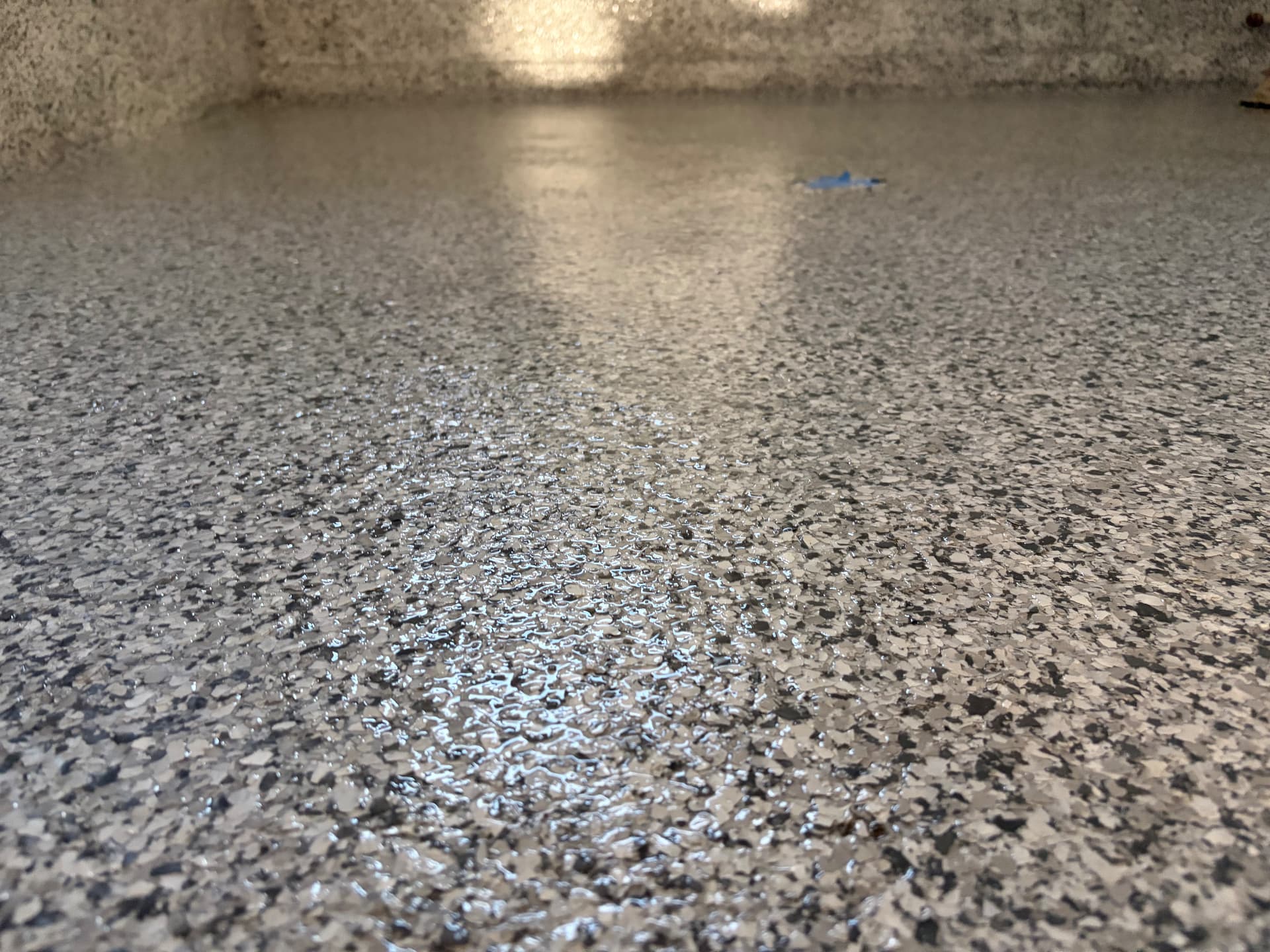
Choose from more than 200 custom flake combinations to suit the space and how it is used.
Practical Planning
We discuss clearing the garage, installation access, and cure time before work begins.
Family Owned
Our family-owned business serves homeowners throughout Central Massachusetts.
A garage floor planned around your household
A garage can be a parking area, a place to keep tools, and the main entrance your family uses each day. Those uses matter when choosing an epoxy floor. We ask where vehicles sit, how the garage gets wet, and which areas see the most foot traffic. We also look at the existing concrete rather than assuming every slab needs the same work. Old paint, oily spots, cracks, and worn edges can change the preparation plan. The goal is a floor system that makes sense for your garage, not simply a color applied over whatever is there.
- Easier routine cleaning: a coated surface reduces exposed concrete dust and gives dirt fewer rough places to collect. Sand and grit still need regular removal, especially where people walk between parked vehicles and the house.
- A coordinated appearance: flake blends let you choose how much visual texture the floor has. We discuss how the finish will look alongside cabinets, steps, walls, and other surfaces you intend to keep.
- Protection for prepared concrete: a suitable epoxy system creates a wearing surface over the slab. Spills still need prompt cleanup, and the finished floor should not be treated as immune to chemicals, impact, or standing water.
- A more usable household space: a continuous finish can make sweeping and damp cleaning more straightforward. Good storage arrangements and clear walking routes remain important, particularly when the garage serves several purposes.
Parking First
For a garage mainly used for vehicles, we discuss tire paths, entry edges, and the water and grit that come in from outside. We also plan when vehicles can return after the coating cures.
Workshop Use
For a garage with a workbench, we ask about dropped tools, rolling equipment, and likely spills. No decorative floor is damage-proof, so those details help set sensible expectations for use and maintenance.
Shared Household Space
For storage and daily foot traffic, we consider appearance, cleanup, and wet walking conditions together. Texture should be discussed in practical terms rather than chosen from a photograph alone.
How we install a residential garage floor
- 1
Clear and assess
The slab needs to be accessible, including the edges and areas beneath stored items. We sweep, inspect the surface, discuss moisture concerns, and identify old coatings or contamination that could interfere with bonding.
- 2
Clean and grind
Greasy areas need appropriate cleaning before coating. We use diamond grinding to open the concrete surface for the epoxy system rather than relying on acid etching. Preparation also includes removing loose material that cannot support a sound bond.
- 3
Repair and detail
We address suitable cracks and spalled areas and discuss any signs of movement or deeper deterioration. Doorway edges, steps, and drains need a clear finishing plan so the scope is understood before coatings are applied.
- 4
Apply the system
Primer and coating layers follow the requirements of the selected epoxy system. If you choose decorative flake, vinyl chips are broadcast into the wet coat, with the surface prepared for its clear protective topcoat.
- 5
Allow for curing
A floor that feels dry is not necessarily ready for parked vehicles. We explain the return-to-use schedule for the installed system and actual conditions, including when walking, moving belongings, and parking are appropriate.
- Attached garages where the floor is part of the household's daily route. We discuss transitions into the house and how to keep access practical while the work and curing take place.
- Detached garages used for vehicle storage or hobby work. Slab condition, moisture, temperature, and access still need review; being separate from the house does not remove those installation considerations.
- Garages with worn bare concrete or an existing coating that needs assessment. A tired appearance does not tell the whole story, so we inspect before recommending repairs, removal, or a new coating system.
Your free on-site estimate considers floor area, existing coatings, contamination, repair needs, access, and the finish you choose. Before the visit, think about where garage contents can stay and whether you need a temporary parking arrangement. Tell us about previous coatings, recurring damp spots, and any areas that collect water. Those details help us explain the preparation scope and likely scheduling constraints. After installation, routine sweeping and cleaning with products suitable for the system help keep the floor usable. Avoid dragging heavy objects, clean spills promptly, and ask before using an unfamiliar cleaner.
Frequently asked questions
Do I have to empty my garage before epoxy flooring?
The slab needs to be clear for preparation and coating, including the perimeter. We discuss access and storage planning before installation so you know which belongings need to move.
When can I park on my new garage floor?
Parking must wait until the installed system has cured sufficiently for vehicle traffic. We give guidance based on the coating requirements and site conditions rather than promising the same timing for every garage.
Can you coat an old garage floor?
An older slab may be suitable after cleaning, grinding, and repairs. We inspect its condition and any existing coating before recommending a system.
Will an epoxy garage floor be slippery when wet?
Any coated floor can become slippery when wet or contaminated. We discuss texture options and the need to remove water, oil, and tracked-in debris promptly.
How much does a residential garage coating cost?
Floor area, coating removal, concrete repairs, moisture conditions, and finish selection all affect the scope. We provide a free on-site estimate after reviewing your garage.
Want Residential Garage Floor Coatings in your space?
Send us the details and we will walk you through the system options, the prep your slab needs, and what the job involves.
Serving Central Massachusetts homeowners and businesses