Epoxy vs. Polyaspartic: Which Garage Floor Coating Is Better?
Cure speed, surface preparation, film thickness, and the concrete underneath all affect results. We install epoxy systems only; the polyaspartic information here helps explain coating terminology rather than describing an installation service we offer.
Epoxy generally gives installers more working time, while polyaspartic coatings commonly cure faster and offer better UV color stability. Polyaspartic is usually a topcoat over epoxy in a hybrid garage system; the right comparison is between complete assemblies, not names alone.
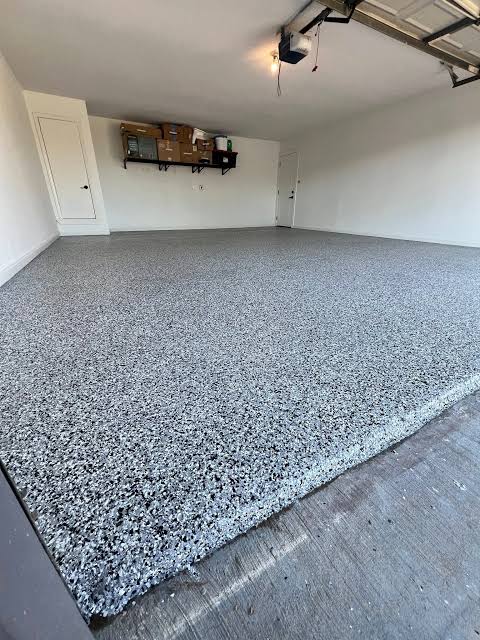
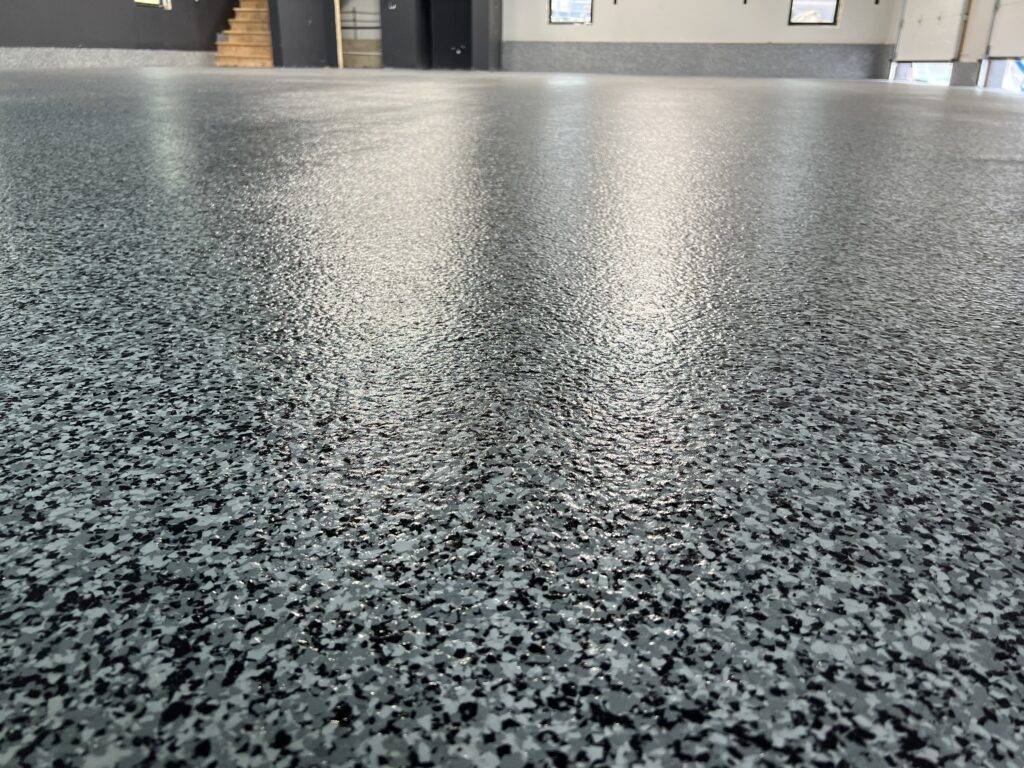
What is the difference between epoxy and polyaspartic?
Epoxy and polyaspartic coatings are different resin chemistries, and each category includes products with different properties. Epoxy is commonly used for primers and build coats because suitable formulations bond well to prepared concrete and provide a useful application window. Polyaspartic materials are often selected as clear protective finishes over an epoxy base and decorative flake. That combination is a hybrid system, even when it is casually called a polyaspartic floor. Some products are designed for other layer arrangements, so the actual specification matters more than the label in an advertisement. Ask which material touches the concrete, which layer holds the flake, and what forms the final wear surface. Compatibility between those layers is essential. A fast finish cannot correct weak concrete or an unsuitable primer. Likewise, an epoxy system is not defined only by its base coat; the complete assembly must match the intended exposure. Our installation offering is epoxy systems, and we do not offer polyaspartic installation.
Which coating cures faster and why does pot life matter?
Polyaspartic products commonly cure faster than conventional epoxy products, but temperature, humidity, formulation, and applied thickness affect the actual schedule. Faster cure can shorten the window between coats and the wait before approved use. It also usually leaves less time to distribute material, maintain a wet edge, and broadcast flake consistently. Pot life is the usable working time after components are mixed under stated conditions. It is not the same as the time before walking or driving is allowed. A material can become unworkable in a container while a properly applied film is still curing on the floor. Epoxy often provides a longer working window, which can help with layout and consistent coverage, but a longer window does not excuse slow or incorrect application. Mixing ratios, batch size, and the stated recoat window still control the work. No generic chemistry comparison should become a promise that every garage can be returned to vehicle use on a particular day.
Which handles sunlight, chemicals, and hot tires better?
Conventional epoxy can yellow or change appearance with ultraviolet exposure, especially near an open garage door. Suitable polyaspartic finishes generally have better UV color stability, although product selection and the behavior of underlying layers still matter. A UV-stable clear layer should not be assumed to prevent every appearance change in an epoxy beneath it. Chemical resistance is also specific to the product and exposure. Gasoline, cleaners, brake fluid, and other automotive liquids should be checked against the coating manufacturer’s resistance information, including concentration and contact time. Neither chemistry is resistant to every spill. Heat resistance depends on the system and whether exposure is brief, repeated, or sustained. Hot tire pickup is influenced by adhesion, preparation, cure, and formulation, not just the topcoat name. Welding sparks, hot metal, and heated equipment can damage organic coatings. Clean spills promptly and use appropriate protection rather than treating a garage finish as a chemical containment system or a heatproof work surface.
| Property | Epoxy | Polyaspartic |
|---|---|---|
| Working window | Often longer, with product-specific mixing and recoat limits. | Often shorter, requiring close control of batch size and application pace. |
| UV appearance | Conventional formulas may yellow or change color in sunlight. | Suitable formulas generally offer better UV color stability. |
| Typical system role | Commonly used as a primer or build coat in a prepared concrete assembly. | Commonly used as a protective topcoat over compatible epoxy and flake. |
| Resistance and cure | Check the exact system for chemical, heat, and return-to-use limits. | Check the exact system; fast cure does not mean universal resistance. |
- Ask for the complete layer schedule rather than accepting a single resin name. Identify primer, base coat, decorative broadcast, and finish so you know what is being compared.
- Discuss actual exposure, including direct sunlight, cleaning products, vehicle use, and workshop heat. Do not assume that resistance to one liquid establishes resistance to another.
- Read the return-to-service instructions for the proposed conditions. Distinguish light foot traffic from moving equipment or parking, and allow additional cure time when required.
- Confirm maintenance and future recoating requirements before choosing a finish. A compatible repair approach and realistic cleaning routine matter after the initial installation is complete.
How should you compare complete garage floor systems?
Start with the concrete assessment and preparation method, then compare the proposed layers and their intended functions. Request the relevant cure instructions, cleaning guidance, and limitations for the exact products specified. Explain whether sunlight reaches the floor, whether vehicles arrive with warm tires, and what chemicals are used in the garage. Those details help identify meaningful requirements instead of relying on a single claim about hardness or speed. Texture and cleanability deserve attention too, because a glossy finish can become slippery when wet regardless of chemistry. Select a system based on its documented suitability and the installer’s ability to prepare and apply it correctly. Our work is limited to epoxy systems, so a request for polyaspartic installation should not be mistaken for part of our service scope.
More questions
Do you install polyaspartic floors?
No, we install epoxy systems only. This comparison explains the materials so readers can understand different proposals.
Is polyaspartic always better than epoxy?
No; suitability depends on the full assembly, concrete, exposure, and application conditions. Faster cure and better UV stability do not eliminate preparation requirements.
Does epoxy always yellow?
Conventional epoxy can change color with UV exposure, but the amount depends on formulation and conditions. Ask about appearance expectations for the exact system and the sunlight reaching the floor.
Can either coating resist every chemical?
No coating should be assumed to resist every chemical or exposure duration. Use the specific product’s resistance guidance and remove spills promptly.
Still not sure what your floor needs?
Send us a few details or a photo of the slab. We will tell you honestly whether coating it is the right move.
Serving Central Massachusetts homeowners and businesses