How to Maintain a Polyaspartic Garage Floor
The same basic care principles apply to many epoxy garage floors, but the installed product’s instructions take priority. We install epoxy systems only; this guide explains maintenance rather than offering polyaspartic installation.
Clean a polyaspartic garage floor with regular grit removal, a soft mop, and a manufacturer-approved mild cleaner, then remove rinse water. Avoid abrasive pads, harsh degreasers, standing water, and dragging appliances or other heavy objects across the finish.

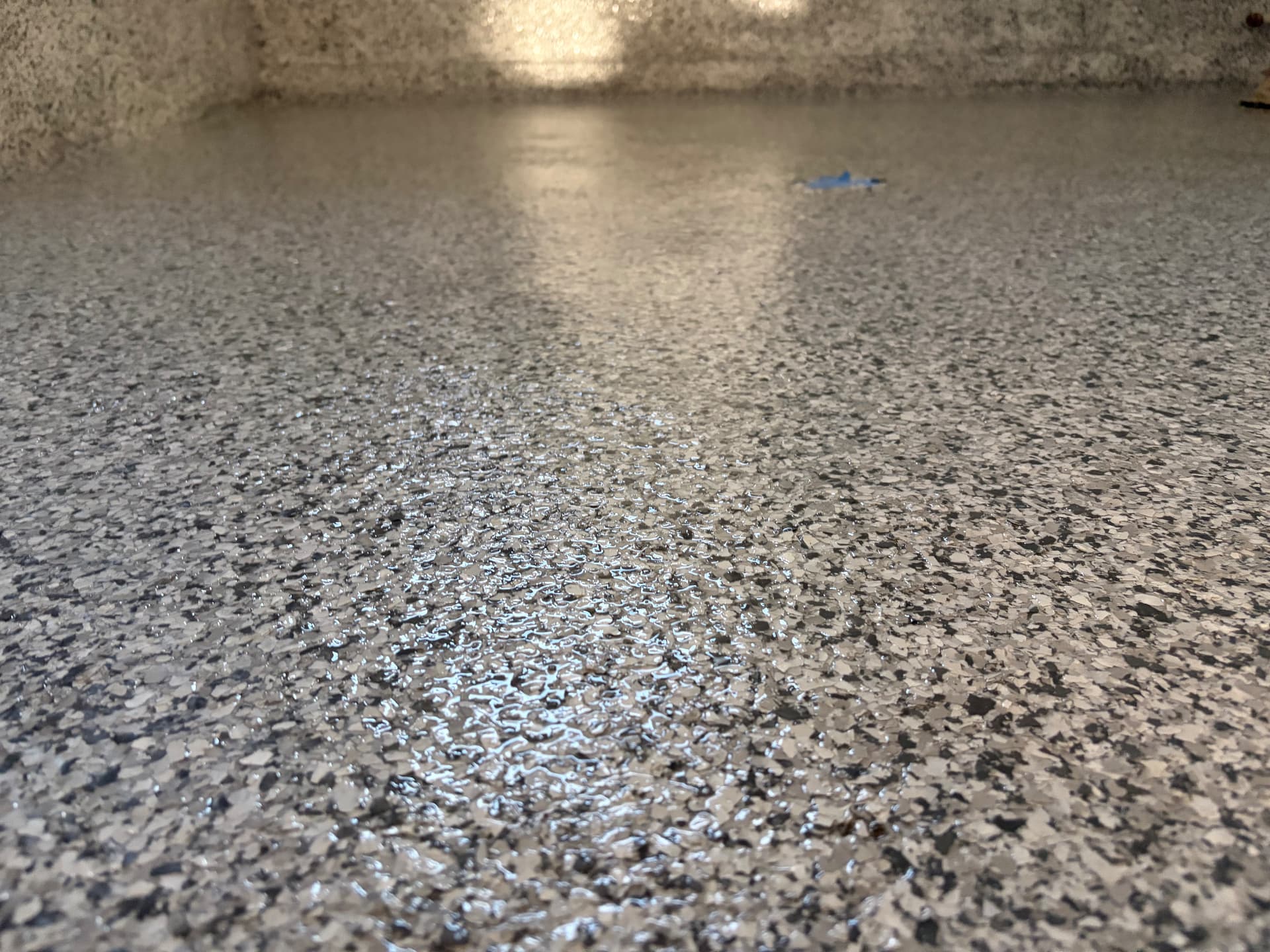
What is the best way to clean a coated garage floor?
Start by removing loose sand, grit, and debris with a soft broom, microfiber dust mop, or a vacuum attachment that will not scratch the finish. Washing over grit can move abrasive particles around rather than remove them. Pay particular attention to the entrance, tire tracks, and areas beneath workbenches where metal fragments or dirt collect. Use a soft mop and a mild, preferably pH-neutral cleaner approved for the installed finish. Follow the dilution instructions instead of making a stronger solution in the hope that it will clean faster. Excess cleaner can leave residue, change the appearance, and make the floor more slippery. Work in manageable sections and remove the dirty solution rather than spreading it into corners. Rinse if the cleaner instructions require it, then remove remaining water with a suitable nonabrasive squeegee or clean mop. Avoid flooding edges, adjoining rooms, and stored belongings. Routine washing should leave a clean surface, not a film of cleaner or puddles waiting to evaporate.
How do grit and Massachusetts road salt affect the finish?
Grit acts as an abrasive when tires, shoes, or equipment repeatedly move it across the coating. Fine scratching may first appear as dull traffic lanes rather than deep visible grooves. Keeping loose particles off the surface is therefore more useful than waiting for the floor to look heavily soiled. Salt tracked into a garage often arrives with sand, dirty snow, and other road residue. Dissolved salt can leave deposits as water dries, while the associated grit contributes to mechanical wear. Remove accumulated snow and slush without scraping the coating with a sharp metal edge. Clean away salt residue using the approved cleaner and remove the wash water. Do not assume a chemically resistant finish makes winter contamination irrelevant. Entrances may need attention more often than sheltered corners, and mats can help intercept debris if their backing is compatible with the coating. Lift mats periodically to clean underneath and let trapped moisture escape. Wet mats and hidden grit should not become permanent features on the floor.
Which cleaners and tools should you avoid?
Avoid abrasive pads, wire brushes, scouring powders, and aggressive scrubbing attachments unless the coating manufacturer specifically allows them. Harsh degreasers, strong acids or alkalis, solvents, and concentrated household cleaners can damage or dull some finishes. A cleaner’s suitability for bare concrete does not establish that it is safe for a resin topcoat. Do not mix cleaning chemicals, and follow the safety instructions for any product used. For oil or automotive spills, absorb the liquid promptly and use an approved cleaning method without grinding contaminated absorbent into the surface. Unknown chemicals deserve caution rather than an improvised solvent treatment. Standing water also creates a slip hazard and can conceal debris, even if the coating itself tolerates routine wet cleaning. Dragging appliances, tool chests with locked wheels, or sharp metal furniture can gouge the finish. Lift items or move them with equipment suited to the load and floor. Clean, compatible protective pads can help under concentrated contact points but should not trap grit or stain the coating.
| Cleaning situation | Suitable approach | Avoid |
|---|---|---|
| Loose dust and grit | Use a soft broom, dust mop, or non-scratching vacuum attachment before wet cleaning. | Grinding debris into the finish with an abrasive pad or hard wheel. |
| Routine washing | Use a mild approved cleaner at its stated dilution and remove dirty water. | Concentrated detergent, harsh degreaser, and persistent cleaner residue. |
| Winter salt and slush | Remove debris promptly, wash deposits, and dry the traffic area. | Standing brine, sharp scraping tools, and wet mats left unchecked. |
| Heavy items and spills | Lift or use suitable moving equipment; absorb spills and clean promptly. | Dragging appliances or leaving unknown chemicals on the surface. |
- Set a cleaning frequency based on use rather than a fixed calendar alone. A garage collecting winter grit or workshop debris needs more frequent loose-soil removal than a lightly used storage space.
- Check cleaner compatibility before broad use, including the manufacturer’s directions and an inconspicuous test where appropriate. Stop if you see softening, discoloration, or an unexpected change in gloss.
- Inspect mat backings, equipment wheels, and protective pads periodically. Remove trapped dirt and moisture so protective items do not become sources of abrasion, staining, or prolonged dampness.
- After washing, examine tire paths and the entrance for scratches, peeling, and blisters. Seek a condition assessment before a cosmetic recoat if damage suggests loss of bond or moisture below the finish.
When does a coated garage floor need professional attention?
Persistent dullness after proper cleaning may be wear rather than dirt. Peeling, blistering, soft spots, and expanding cracks need assessment because they can indicate a problem that cleaning will not fix. Stop using an unfamiliar chemical if the surface changes appearance or becomes tacky, and keep the product information for whoever evaluates the damage. A maintenance recoat may be possible on a sound, compatible system, but preparation and adhesion still matter. Do not apply a new clear finish over loose coating or unknown residue. Keep the original system information and care instructions where they can be found. If the existing floor is polyaspartic, confirm that any repair provider and proposed materials are appropriate for that system; our installation services remain limited to epoxy systems.
More questions
Can I use a harsh degreaser for an oil stain?
Do not assume it is compatible with the topcoat. Use an approved cleaner and follow its dilution and contact-time instructions.
Is a pressure washer the best routine method?
Not necessarily; pressure and water intrusion can damage vulnerable edges or adjacent materials. A soft mop and approved cleaner are usually a more controlled routine approach.
Are rubber mats always safe?
No; some backings can stain or trap moisture against a finish. Check compatibility and lift mats regularly to clean and dry underneath.
Do you install polyaspartic coatings?
No, we install epoxy systems only. Maintenance guidance for an existing polyaspartic floor should still be checked against that floor’s manufacturer instructions.
Still not sure what your floor needs?
Send us a few details or a photo of the slab. We will tell you honestly whether coating it is the right move.
Serving Central Massachusetts homeowners and businesses